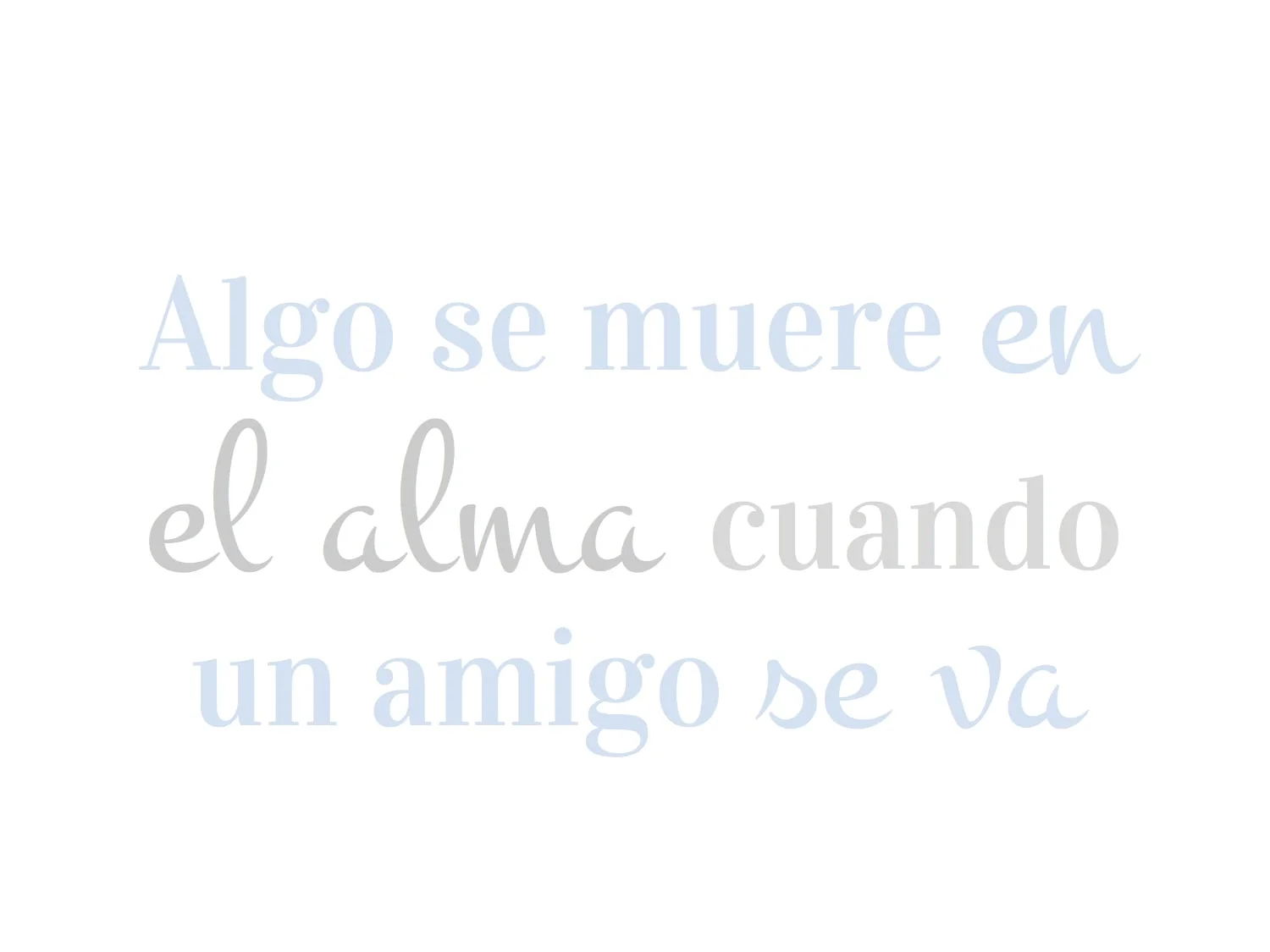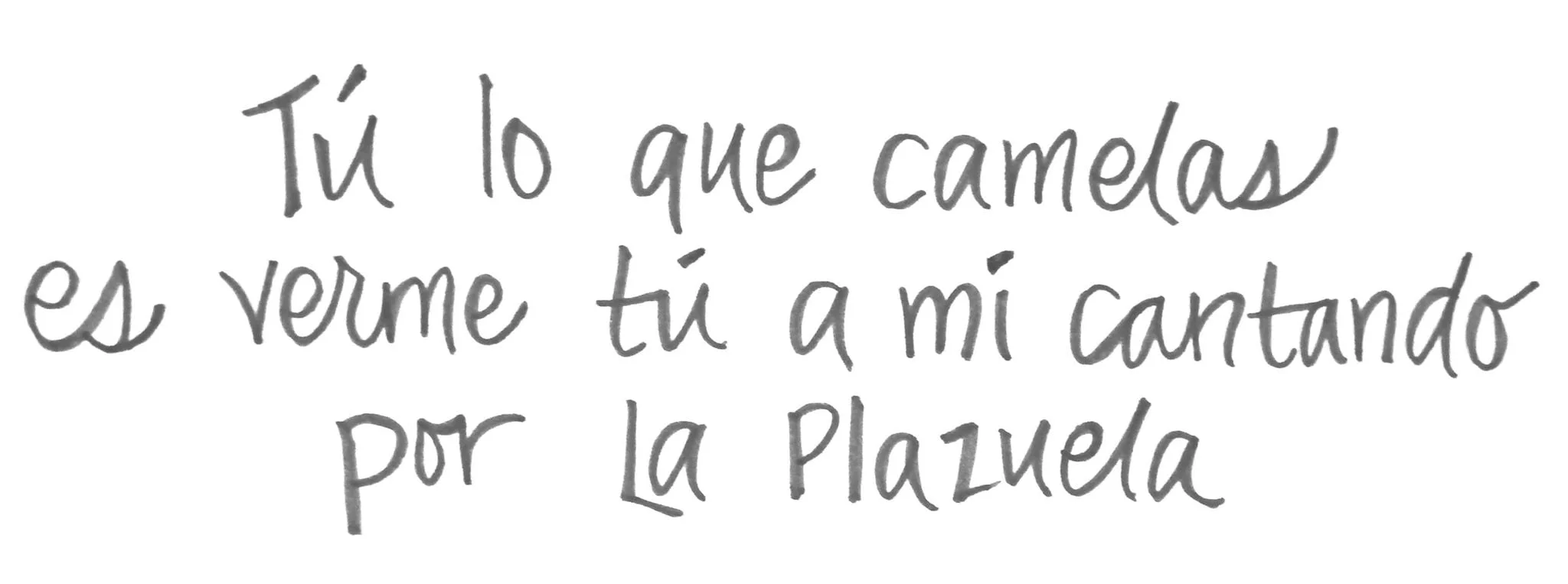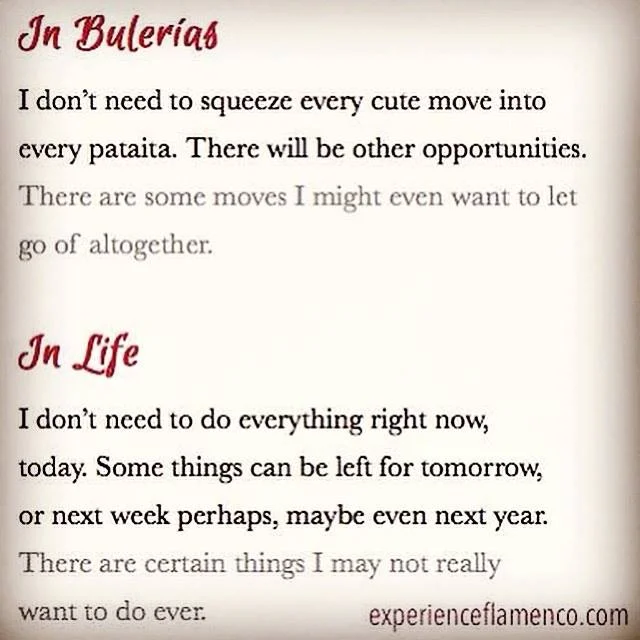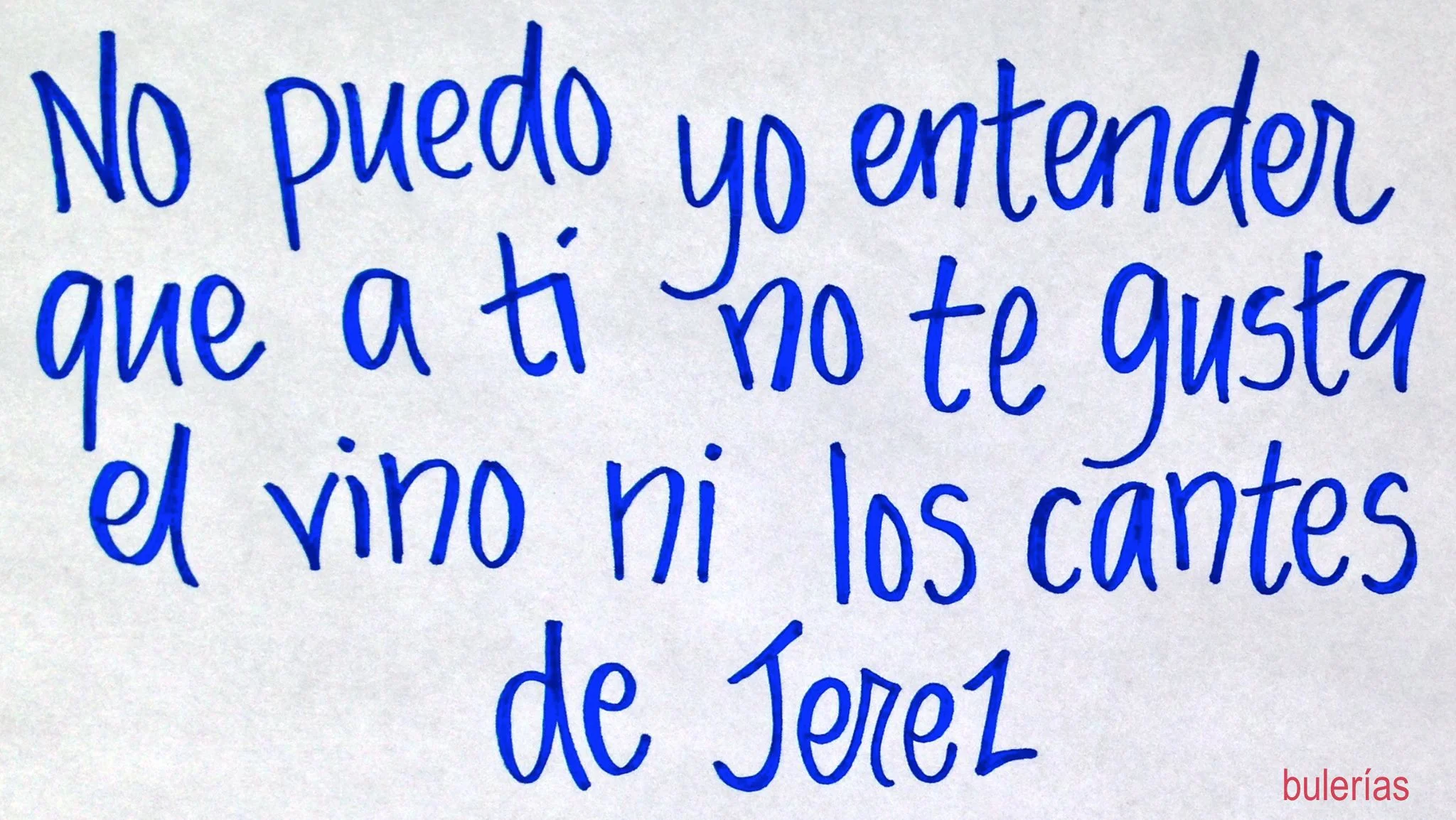

Here’s an estribillo por bulerías
Llorando me paso la vida
How to dance flamenco, flamenco travel in Spain, flamenco dance students and their experiences, interviews with flamenco artists, translations of flamenco letras (songs) from Spanish to English
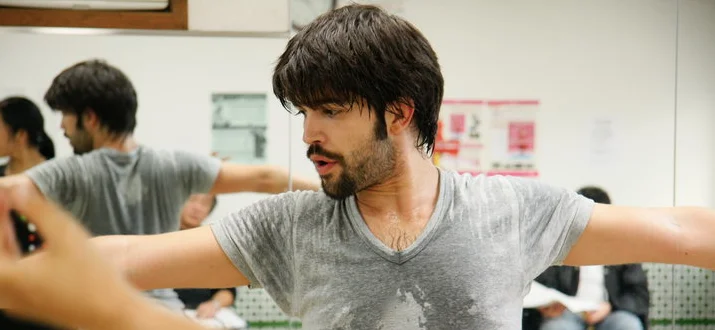
In November 2013 after the Flamenco Tour to Jerez was finished, I traveled to Barcelona to study with David Romero. (And to research holding a flamenco trip there with him, which is happening in November, woot!) My friend Stefani and I had daily classes with David (our own private flamenco workshop). Often times we would meet with him before or after class to have a coffee and chat.
The interview took place in the little restaurant by the studio where we used to meet. We had lunch. We had café. And then we got to filming.
We did some shooting inside, some outside. I filmed some, Stefani filmed some. A couple of clips cut off in strange places because, well, I guess I stopped or started shooting too early or too late. Oops. I did my best to edit out the background noise, but you will definitely hear some potatoes being fried, sirens, a few outside voices, stuff like that. You'll also see some ladies on their way to the restroom, which happened to be our backdrop during part of the interview. I guess it all adds to the ambiente, the ambiance . . .
David has been dancing since he was three years old. He grew up going to peñas and hearing flamenco. He's from Barcelona, but his family is from Andalucía. In the video David talks about how his parents, originally from Huelva in Andalucía, ended up in Barcelona, the influences of hearing flamenco in his home, how he began dancing flamenco professionally (in a tablao when he was underage, having to run and hide when the authorities came by), his teaching philosophy, how he goes about creating a choreography and even just creating a step.
I received an inquiry about the words to the following sevillana this week. It's one of the first I learned.
Faly used to sing it, and we would dance to it. And dance to it. And dance to it. And then we would dance to it. Ever been there?
So, here you go.
Last week you heard the letra that we studied with José 'El Mijita' on the Flamenco Tour to Jerez. This week I want to share with you the coletilla we worked on. (Along with another video snippet)
It is a mouthful.
Not. easy. to. sing.
Getting all of the words in the last line out of your mouth, number one, in compás, number two, while playing palmas, number three, and following the melody, number four.
Like I said, not easy to do. But we sure had fun trying.
See for yourself in the following video snippets
This week I learned about daylilies. And as it turns out the process I went through in learning about this flower led me to a mini-formula that is perfect for learning to dance por fiesta palos like bulerías. (I'll share that with you in a moment.)
On Monday morning Stefani and I were on a walk when we happened upon bunches and bunches of bright golden daylilies. I’ve been noticing them everywhere this summer, including in my garden. I did not know what these flowers were called, and I’d never bothered to find out. I didn’t even bother to notice that their petals and shape look very much like ‘regular’ lilies. I guess because their colors, golden, yellow, red, orange, peach . . . are so distinct.
“I have those flowers in my garden,” I said to Stefani, “I cut some and put them in a vase, and the next day they were dead.”
“Well yeah, those are daylilies,” she responded. “They only live for a day.”
And this is how I came to learn why the ones in my vase at home had lasted, well, one day.
She proceeded to tell me more about the flower, information I won’t bother sharing with you because learning about flowers is not the point of this story.
(I’m getting to the point.)
Before I became aware of their name and the whole one day of life thing, I had already decided that I was not going to go around cutting more of these flowers and putting them in vases inside my house. Before Stefani told me about their life span, I had discovered on my own through trial and error that these flowers would be better enjoyed in the garden.
For the time being at least . . .
This is a story about how doing less in bulerías can serve us well. It's the follow up to the previous post on observation. Read on, and find out how to simplify your bulerías and perhaps even your life a bit too.November 2013, Jerez de la Frontera, Spain
She said she was going to show them how to dance on a losa.
Pequeña,
Y por fiesta.
Small,
And party style.
It was Ani who said that. Ana María López. She said it on a Monday morning in Jerez.
On the past two Flamenco Tours to Jerez we've had a cante class with José 'El Mijita.' Exciting, Scaaaary, and FUN! You can see video of that at the end of the post.
Above is one of his favorite letras to sing por bulerías; it's one we worked on in the classes.
Why do we study the cante?
We do it to expand our understanding of flamenco as a whole. Because as we know, the dance does not exist on its own. We do it to broaden our understanding of the language of flamenco. To learn new things. And, of course, to have fun...
During the class last spring Lily, one of the students, held onto Héctor Raúl for the duration of the class. She wasn't quite sure why, but I'm pretty positive it was a subconscious act done for support.
Because this experience took people out of their comfort zones.
A story on the value of observation from a past Flamenco Tour (followed by four bulerías take-aways):
About flamenco and Jerez and what I'm doing here and what I want to learn here.
And I set some intentions for the week.
I had a few.
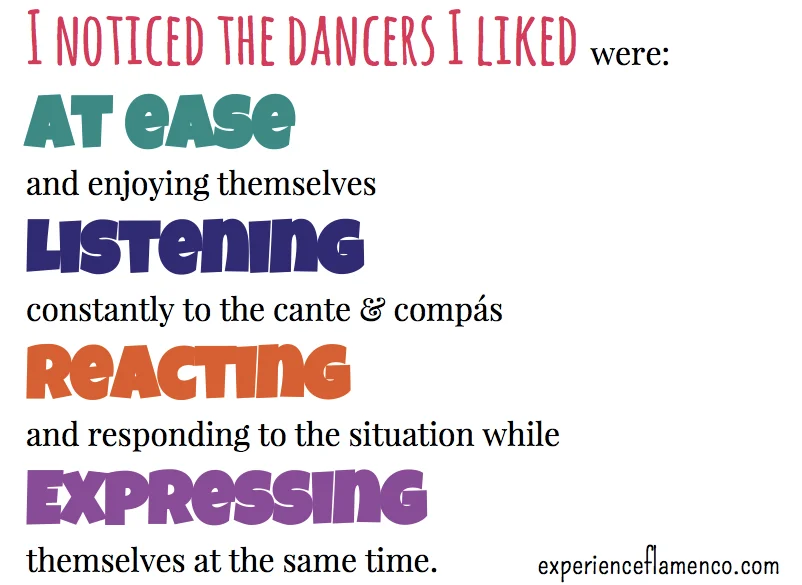
To observe people dancing bulerías. Especially people whose dancing I liked. In class and out. Anywhere and everywhere.
To watch them, really watch them. And to notice what was happening.
To notice how they responded to the cante.
To notice how they danced with the compás.
To notice when they did what they did.
To notice the things I liked.
To notice the things that worked.
Maybe even to notice the things I didn't like.
And to notice the things that didn't work.
That was the day Ani taught the ladies about dancing on a floor tile. I'll tell you about that in the next post.
It was also the day she read my mind.
Bulerías
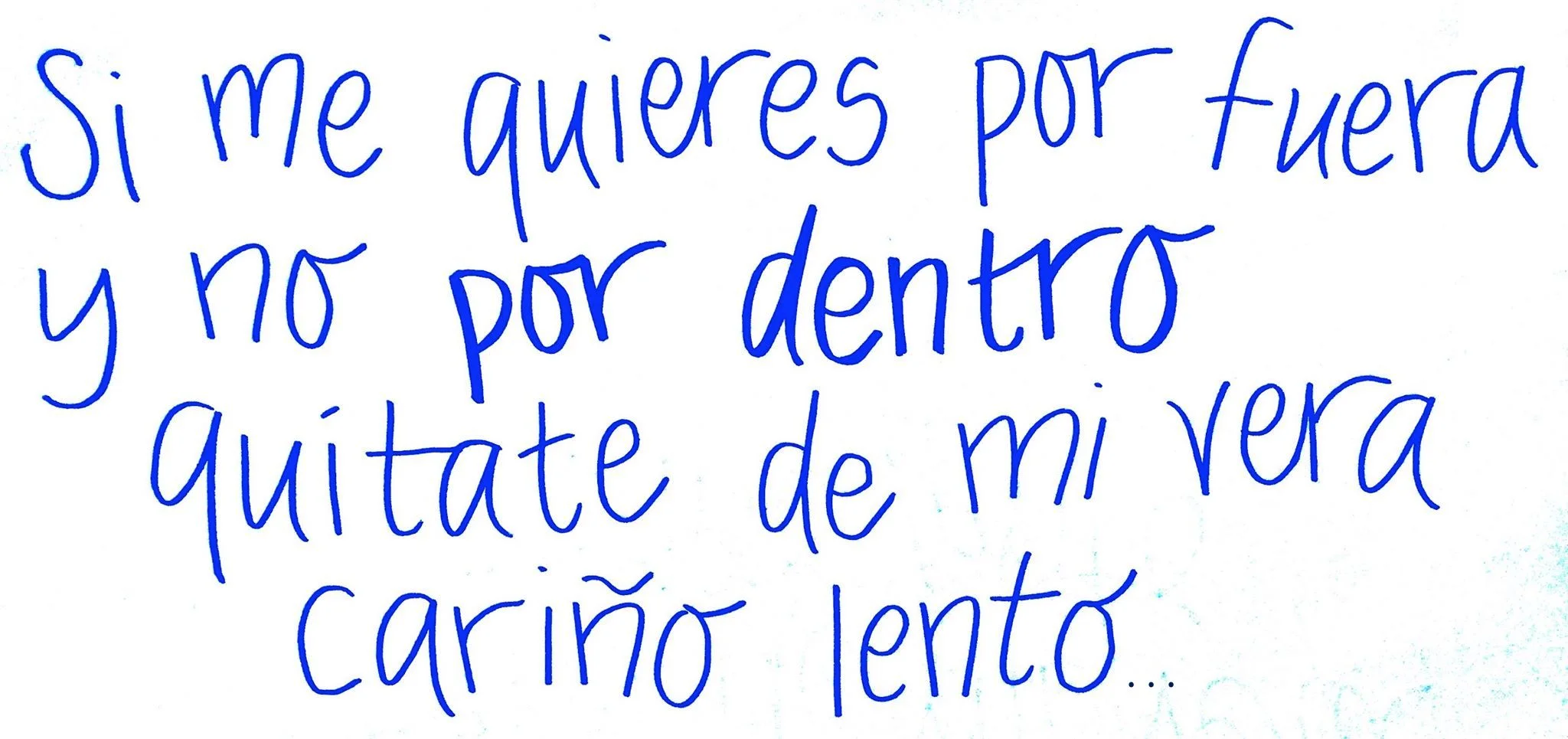
Si me quieres por fuera y no por dentro
Quítate de mi vera cariño lento
Si me quieres por dentro y no por fuera
Déjame que te bese tu piel morena
Today I share with you another favorite letra from Sol:
Por el habla de la gente
olvidé yo a quien bien quería
mientras yo viva en el mundo
se me acabó la alegría
I'll be honest. In the beginning, I wasn't a huge fan of flamenco singing.
It wasn't that I didn't like it.
It intrigued me that's for sure. But I didn't feel inclined to sit around and listen to it a whole bunch.
It didn't take long before that changed.
I guess it happened early on during my time in Sevilla, on that first flamenco trip.
And actually, while I was initially drawn to the baile, the cante played a huge roll in getting me hooked on flamenco ... and keeping me in it.
Just like the compás.
Well, you know how it is now.
Which brings me to the letra:
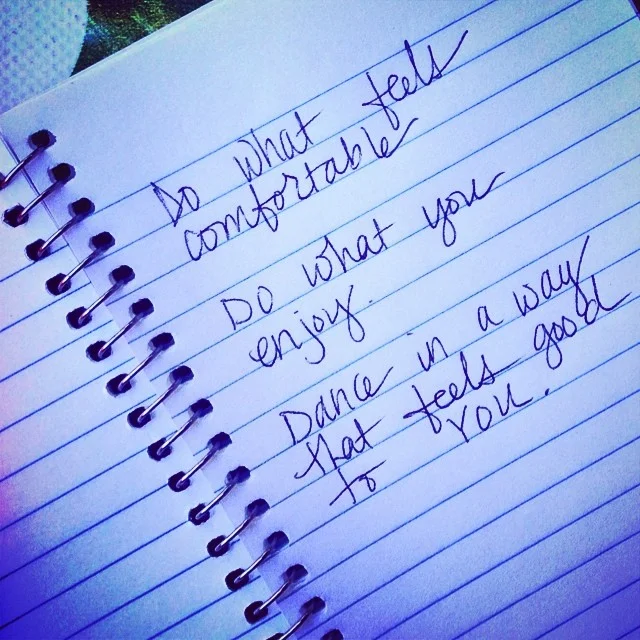
I have some more bulerías advice from Ani for you about feeling good today. But first,
Because you learn a lot of steps in in bulerías class.
You could say they are just steps.
To play with.
To practice.
To try out.
To hold on to. (Or to let go of.)
They can even be thought of as tools for understanding how the conversation works.
One day in Jerez
I wrote this back in the fall of 2013 when I was in Barcelona studying with David Romero. I thought you might enjoy reading it and finding out more about him...
November 22, 2013
I told you I'd be visiting Barcelona to study with David Romero.
I told you I'd been wanting to take classes from him for years.
Finalment!
(Catalán. We are in Barcelona after all.)
Studying with David.
Tangos.
Tangos del Titi
Popular
Mi mare me lo advirtió
que a ningún forasterito
le diera conversación
My mother warned me
not to strike up a conversation
with a stranger
You can hear Argentina sing this letra in the video below
Bulerías doesn’t exist anywhere as it does in Jerez.
And that's that.
That's why they call it Bulerías de Jerez.
I'm not saying you have to be in Jerez to do bulerías or anything like that.
Not at all.
You can find and do bulerías all over the place.
Nor am I saying you have to be from Jerez to do awesome bulerías.
Not at all.
(Many of you know how Ricardo first got me with his bulerías back in 2006. )
In Jerez you hear bulerías all over the place.
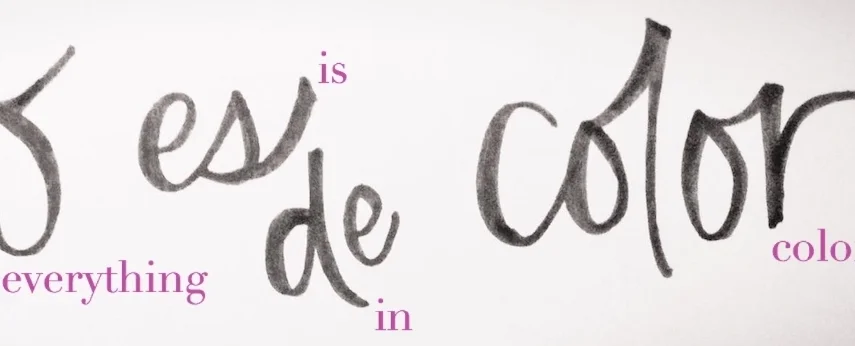
I saw this video the other day on Facebook with Argentina (so beautifully) singing this coletilla,
Todo es de color...
Accompanied by Farruquito, sitting at a dining room table. (You can hear it at about 3 minutes.)
It's actually an entire song, and it's kind of long, and you definitely don't want to miss the video of Lole and Manuel performing it live which you'll find (along with the translation) as you scroll down in the post...
Todo es de Color
J.M. Flores*
Todo es de color
Todo el mundo cuenta sus penas
pidiendo la comprensión,
quien cuenta sus alegrías
no comprende al que sufrió
I told you that today I'd post a video of Manuel Molina singing...
Along with another letra:
Que Nadie Vaya a Llorar
Que nadie vaya a llorar el día que yo me muera
es más hermoso cantar aunque se cante con pena
que nadie vaya llevar ni flores ni ropa negra
no me vayáis a enterrar para pudrirme bajo tierra
es más hermoso cantar mientras mi carne se quema
y luego me ofrecéis al mar o al aire o sobre la arena o en un jardin,
me da igual
pero cuando yo muera que nadie vaya a llorar
Nobody cry the day that I die
It's more beautiful to sing even if one sings with sorrow
Nobody bring flowers or wear black clothes
Don't bury me just to rot underground
It's more beautiful to sing while my flesh burns
And then offer me to the sea, or to the air, or over the sand, or in a garden,
It doesn't matter to me,
But when I die, nobody cry
You can watch another version here, one that will be part of the upcoming Flamenco Sin Fronteras documentary.
Oh, and you might want to check this out as well.
At his funeral, people sang as he requested, and his daughter, Alba Molina wore white.
Manuel Molina passed away on Tuesday. Que descanse en paz.
May he rest in peace.
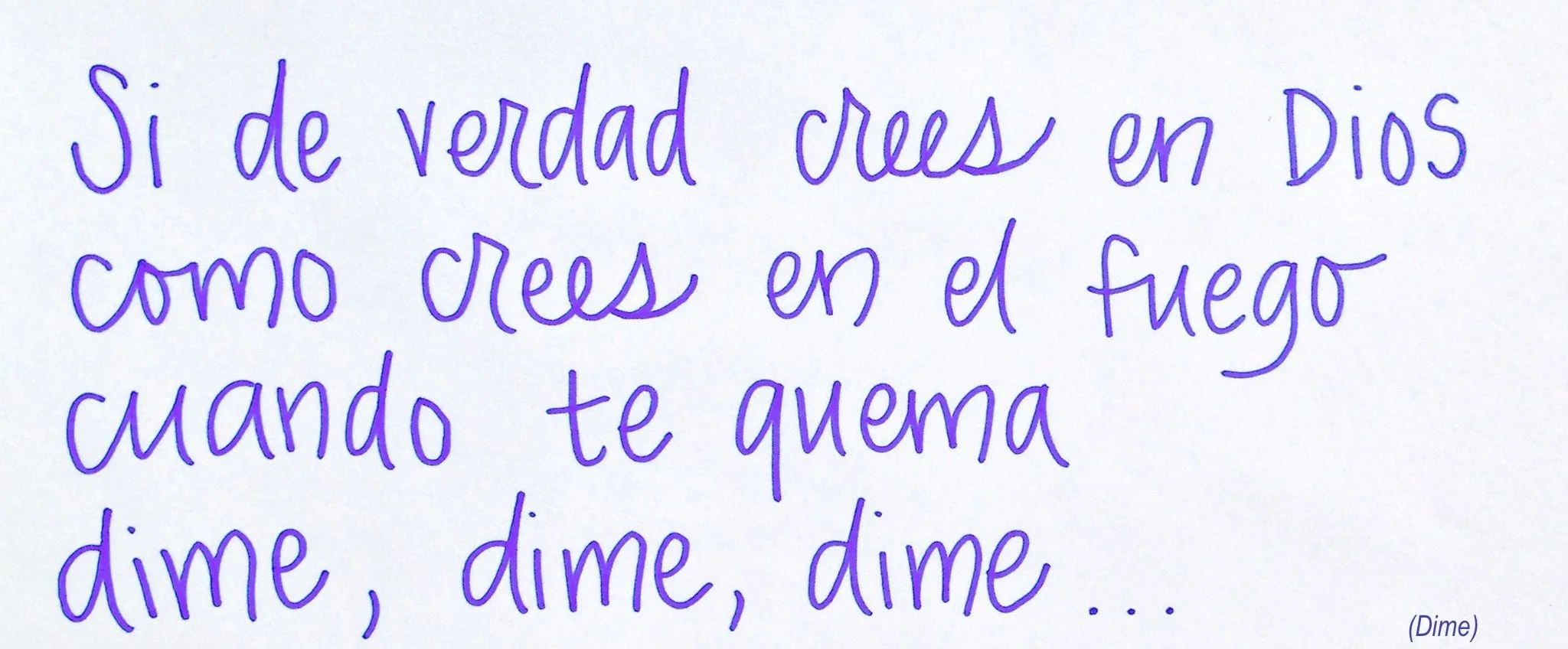
Here is something to remember him with today. An incredibly beautiful video of Lole y Manuel performing Dime.
I want to tell you about some things that help me to feel better when I'm in a funky place. I also want to show you a very cool video and share a flamenco verse with you. But first, some words I wrote last week
(my first week back home post Flamenco Tour)
Coming home I feel overwhelmed.
This is not new.
It is how I usually feel after a trip to Spain. Excited to be back but overwhelmed and sort of confused at the same time.
I want to tell you about green bananas. Because knowing about green bananas will help you when it's time to dance bulerías. (In Jerez or anywhere really).
Tú vas a comer un plátano verde?
This is what Ani asked Ana.
Ani is Ana María López, the bulerías teacher.
Ana is a student from Russia.
Un plátano verde is a green banana.