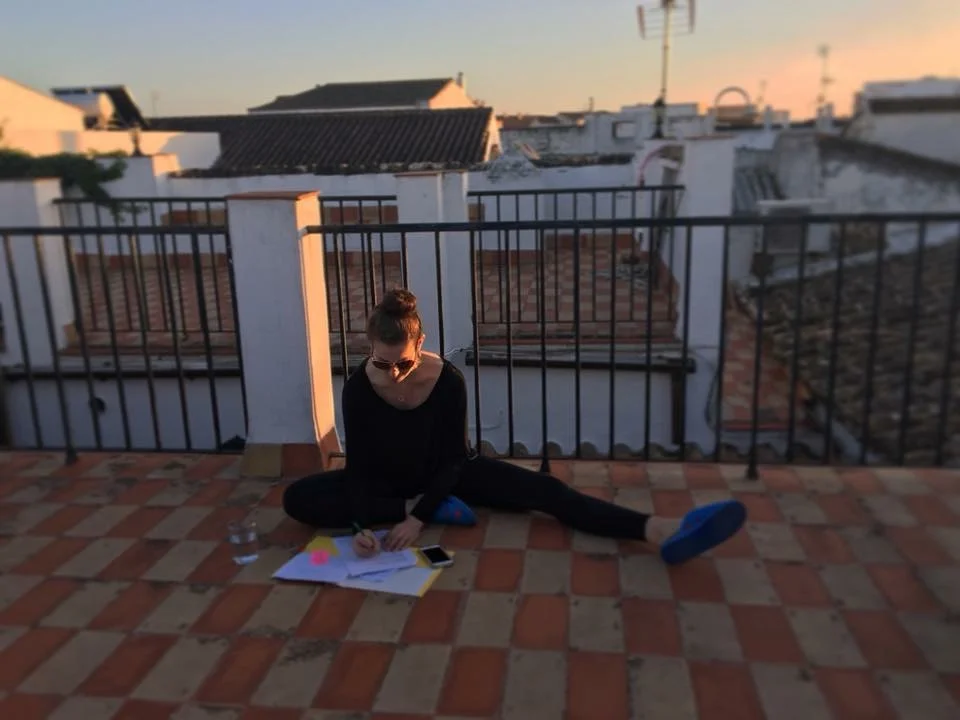
“I never made a conscious choice to pursue flamenco. I was born in a place (Jerez) and into a family where flamenco was a natural part of life,” - David Lagos
Enjoy this brief video interview to learn more about one of the foremost flamenco singers of today, David Lagos, winner of the Premio Andaluz del Flamenco,
Keep Reading
This was my very first performance with Ricardo, which wasn’t supposed to have happened.
It was March of 2010.
Ricardo López was coming to Portland to give workshops...
Keep Reading
Curious how the pandemic lockdown affected Emilio Ochando’s artistic life?
Listen in on our recent conversation, or check out the summary below.
Emilio talked about how the pandemic has influenced his dancing and creativity, projects he’s been involved with, his upcoming online workshops, the Premios MAX, and what he’s envisioning for the future…
Keep Reading
What scares flamenco dancer Manuel Liñan?
Watch the documentary, Flamenco Queer, and find out.
Keep Reading
The first full flamenco dance I learned was with abanico.
After our first class Ana, my teacher in Sevilla, told me to go out and get a flamenco fan.
(She also told me to get flamenco shoes which I did not do. )
Keep Reading
A couple of years ago on a rainy June day in Madrid, Marco Flores and I sat down at a café in his neighborhood of Lavapiés in Madrid for an interview.
You won’t find the usual information about how he got started in flamenco, etc. in the video below…
Keep Reading
Flamenco dancer Cristina Hall talks about her life as an artist starting from her first class in her hometown of San Francisco all the way to Sevilla, Spain where she has resided for nearly twenty years. She touches on everything from practice to performance to the creative process to self expression to artistic choices to discipline, a must-listen for any flamenco dancer, student or professional.
Do you practice as much as you’d like to? What about simply showing up for class? How do you make time for flamenco in your life?
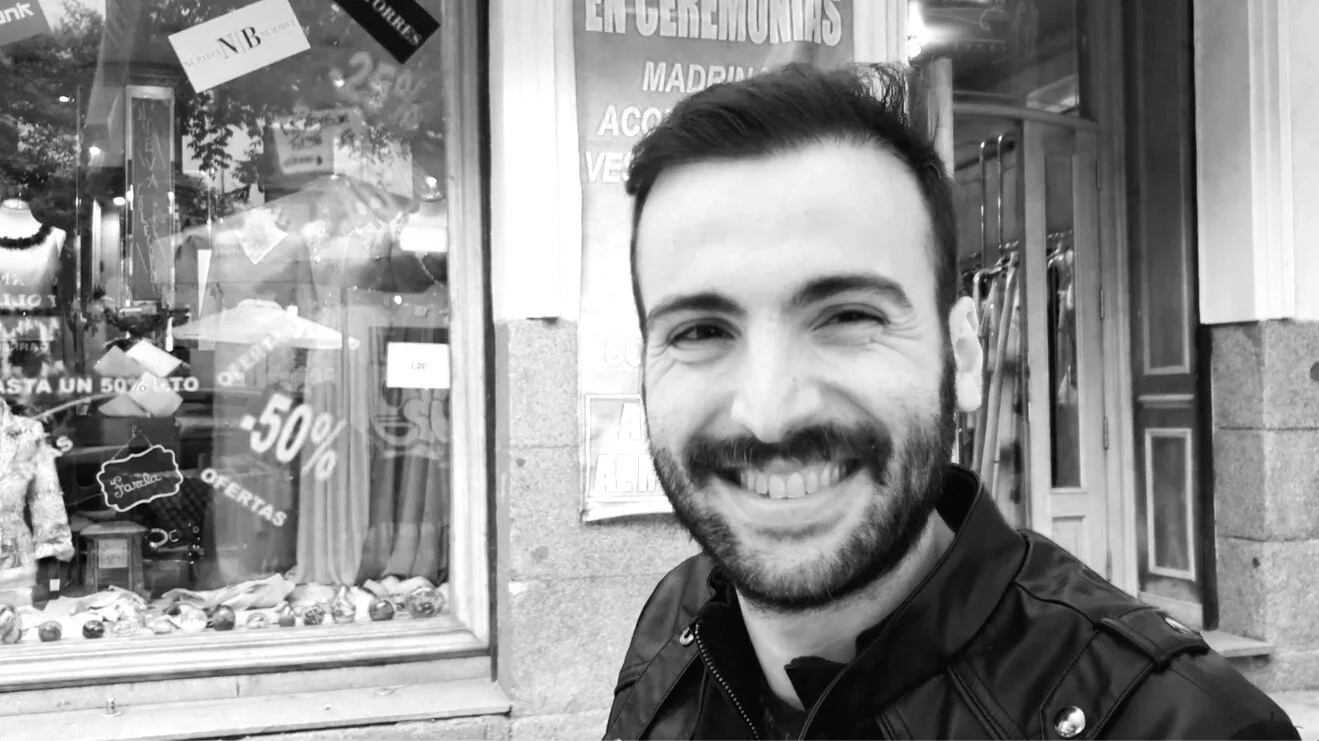
The following interview with Jackie Pasciak, flamenco dancer from Portland, Oregon, is packed full of gems and a must listen for students.
Jackie and I did this interview as we navigate shelter in place life during the height of the Coronavirus.
“What keeps me in flamenco is my flamenco community. When I’m away from flamenco for awhile the people and the community and the sense of supporting each other…is what I really miss and what always brings me back.”
Learn about Julie’s flamenco journey in this interview where she shares everything from how she got started to how she finds time for it in busy life to what she finds most challenging about flamenco. She even shares some advice for her fellow flamenco learners…
How did you find flamenco?
This is one of my favorite things to ask flamenco lovers.
I love learning people’s flamenco stories, don’t you?
Did you know Cristina Hall, who will be teaching in Portland this weekend, and YES, you can still join us, was named one of Dance Magazine's 25 to Watch?
I asked Cristina three questions about teaching, creation, and inspiration. Here’s what she had to say.
What do you enjoy most about teaching flamenco?
Now that you have an idea of what it's like to spend a day in Jerez, here’s a peek at our neighborhood.
We stay in el Barrio de San Miguel, also known as La Plazuela, one of the two main flamenco neighborhoods of Jerez, where the scent of flamenco is everywhere.
On the Flamenco Tour to Jerez we take one full day off.
During the Flamenco Tour we walk around a lot.
Sherry comes from Jerez and is a big part of the culture there, so of course we take a trip to a sherry bodega on the Flamenco Tour to Jerez.
We visit the Hammam Andalusí on the Flamenco Tour. It is a bathhouse equipped with three pools of water of differing temperatures, a sitting area, a massage area, and a dressing room with showers and bathroom.
This visit is well deserved partway through our trip!
There are many opportunities to see live flamenco in Jerez.
At the tabancos, the peñas, in bars and restaurants, at the tablao, at the theater …
Keep Reading
In Spain, one's definition of nighttime can change.
The siesta doesn’t even end until around 5:30-6:30 pm.
Meaning in España, the second half of the day begins in the evening.
I’ve noticed something about flamenco dancers,
They tend to enjoy shopping.
Playing palmas was one of those unexpected loves for me.
We play plenty of palmas on the Flamenco Tour.

![Q & A with Flamenco Singer David Lagos [Video]](https://images.squarespace-cdn.com/content/v1/568079e7bfe873f15c115eee/1647044641228-4J5HR9QZQRHRN1DA1M3M/IMG_6048.jpg)



![Just Keep Showing Up | Flamenco Student Stories [Jackie]](https://images.squarespace-cdn.com/content/v1/568079e7bfe873f15c115eee/1587505862489-V0F76JZTRPATFVU1RC6T/IMG_6229.jpg)
![My Flamenco Community Keeps Me In It | Flamenco Student Stories [Julie]](https://images.squarespace-cdn.com/content/v1/568079e7bfe873f15c115eee/1586767354689-6SWCKCGGP6BHOJO1MZYQ/IMG_6251.jpg)


![Part 13: (Bonus) Our Neighborhood [A Day in the Life of a Student on the Flamenco Tour to Jerez]](https://images.squarespace-cdn.com/content/v1/568079e7bfe873f15c115eee/1578124556461-57U075EZ844MD102837Z/Lola.jpg)
![Part 12: The Free Day [A Day in the Life of a Student on the Flamenco Tour to Jerez]](https://images.squarespace-cdn.com/content/v1/568079e7bfe873f15c115eee/1577870389907-TETMS0VUW9GW9ZVLKR77/Sanlucar.jpg)
![Part 11: Other Activities [A Day in the Life of a Student on the Flamenco Tour to Jerez]](https://images.squarespace-cdn.com/content/v1/568079e7bfe873f15c115eee/1577870133093-I327HP5Z44HI5EDUIFH5/Walking+street.jpg)
![Part 10: The Sherry Tour [A Day in the Life of a Student on the Flamenco Tour to Jerez]](https://images.squarespace-cdn.com/content/v1/568079e7bfe873f15c115eee/1577869622155-NRXMPZVUJOFJ0GP7FS65/IMG_6251.jpg)
![Part 9: The Hammam [A Day in the Life of a Student on the Flamenco Tour to Jerez]](https://images.squarespace-cdn.com/content/v1/568079e7bfe873f15c115eee/1577869343309-IDD3SE466T1EN82X2AP4/Hammam+Tassles.jpg)
![Part 8: The Shows [A Day in the Life of a Student on the Flamenco Tour to Jerez]](https://images.squarespace-cdn.com/content/v1/568079e7bfe873f15c115eee/1577868953361-7ZARD7GYLKRYJKWPKRFS/VAnessa+red+bata.jpg)
![Part 7: Nighttime [A Day in the Life of a Student on the Flamenco Tour to Jerez]](https://images.squarespace-cdn.com/content/v1/568079e7bfe873f15c115eee/1577868155130-UDJA53V64IHSLIZXXS0G/dinner.jpg)
![Part 6: Shopping [A Day in the Life of a Student on the Flamenco Tour to Jerez]](https://images.squarespace-cdn.com/content/v1/568079e7bfe873f15c115eee/1577867747398-KAUIDNFK6ZSKQF7SRJ09/circle+shoes.jpg)
![Part 5: Palmas [A Day in the Life of a Student on the Flamenco Tour to Jerez]](https://images.squarespace-cdn.com/content/v1/568079e7bfe873f15c115eee/1577867207182-W7KLSSLPJ22VSXDY0PJG/1011466_1402925873254565_429986368_n.jpg)